3 Silent Killers Stealing Smallholder Farmers' Income — And How to Fight Back
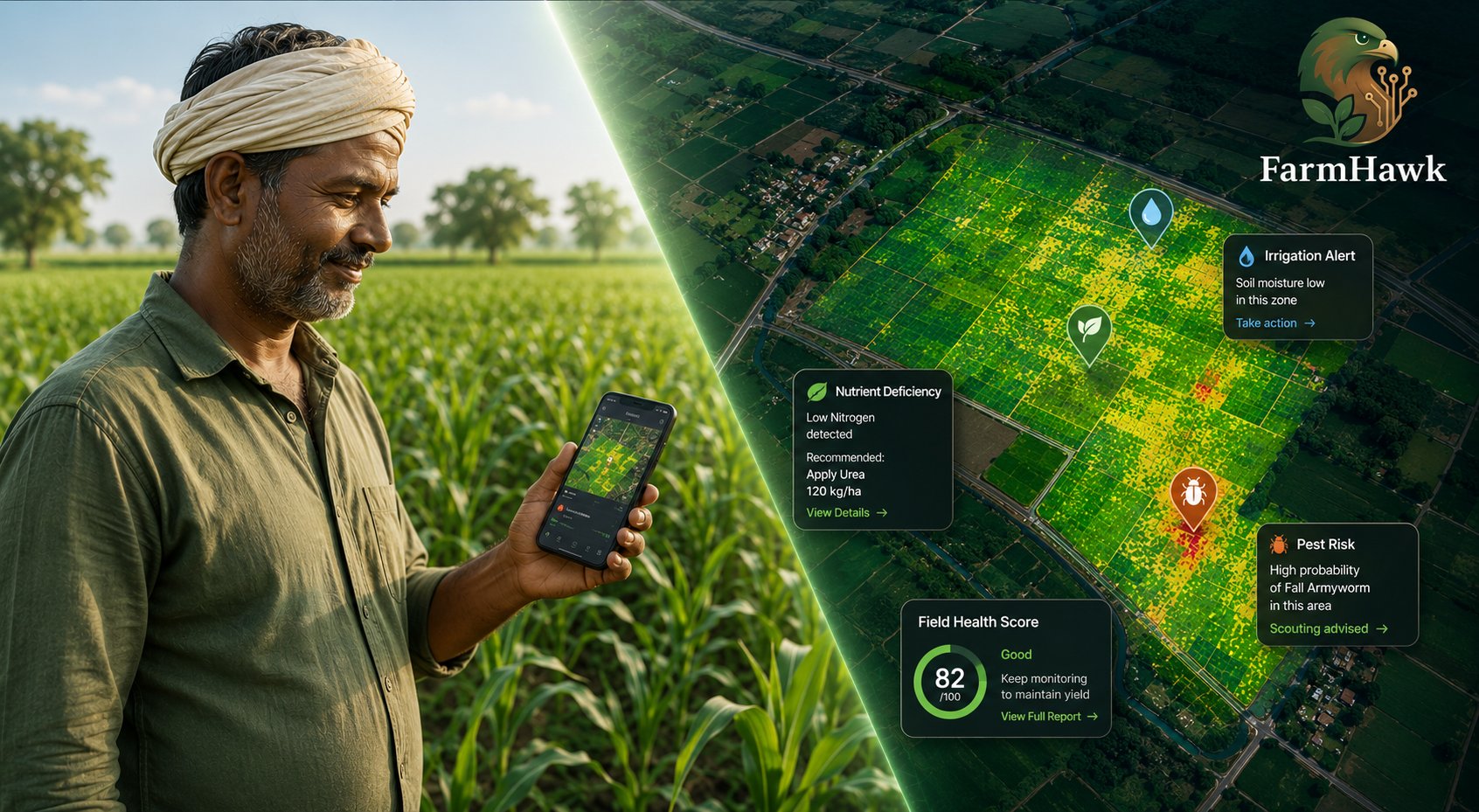
FarmHawk — Satellite intelligence meets smallholder farming
Every season, millions of smallholder farmers across India and Africa face the same cycle: crops damaged by drought they had no way to predict, harvests shrinking year after year, and selling at whatever price is offered because they have no data to negotiate with.
These **three silent killers** — climate-driven crop loss, invisible yield decline, and lack of market leverage — are eroding the income of farming families who grow 80% of the food in the developing world.
But the tools to fight back now exist. And they don't require drones, soil sensors, or a university degree.
1. Crop Loss from Climate Variability
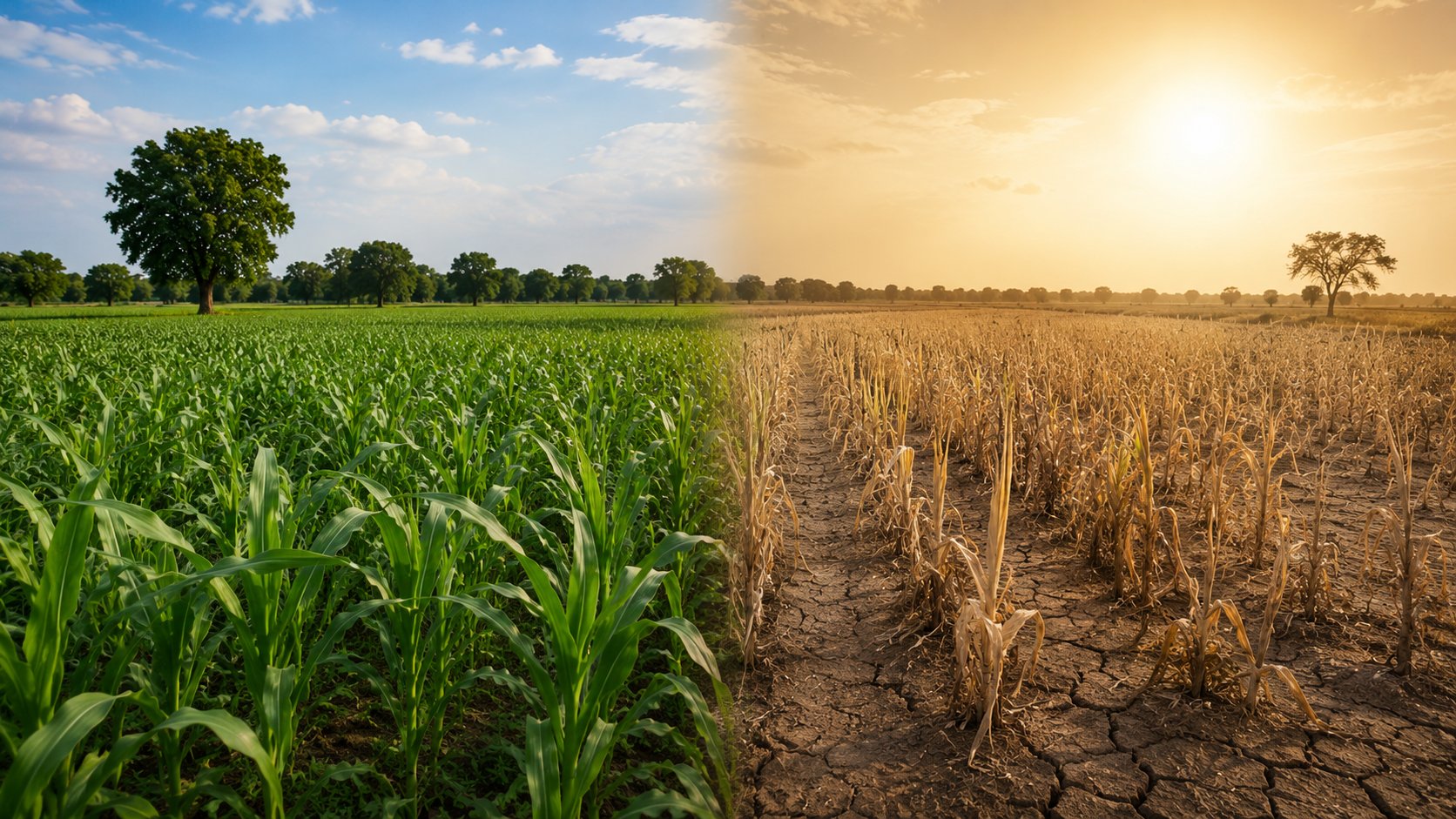
Climate impact — healthy field vs drought-stressed field
Climate change is no longer a distant policy discussion. For smallholder farmers, it shows up as unseasonal rains destroying ready-to-harvest crops, dry spells appearing without warning during critical growth stages, and heatwaves that stress plants in ways that aren't immediately visible.
Most farmers only realise something is wrong when leaves start yellowing or wilting — by then, significant damage has already occurred.
What satellite intelligence changes
Platforms like FarmHawk use Sentinel-2 satellite imagery to monitor crop health remotely. By analysing vegetation indices (NDVI, NDMI), they can detect moisture stress and canopy decline before it becomes visible to the eye — giving farmers a window to act.
A farmer who knows his field's moisture is dropping can irrigate before the crop suffers. One who sees early stress in a specific zone can investigate before the problem spreads.
The advantage isn't prediction of weather — it's early visibility into what's actually happening on the ground, derived from what satellites see from space.
2. Declining Yield: The Hidden Enemy
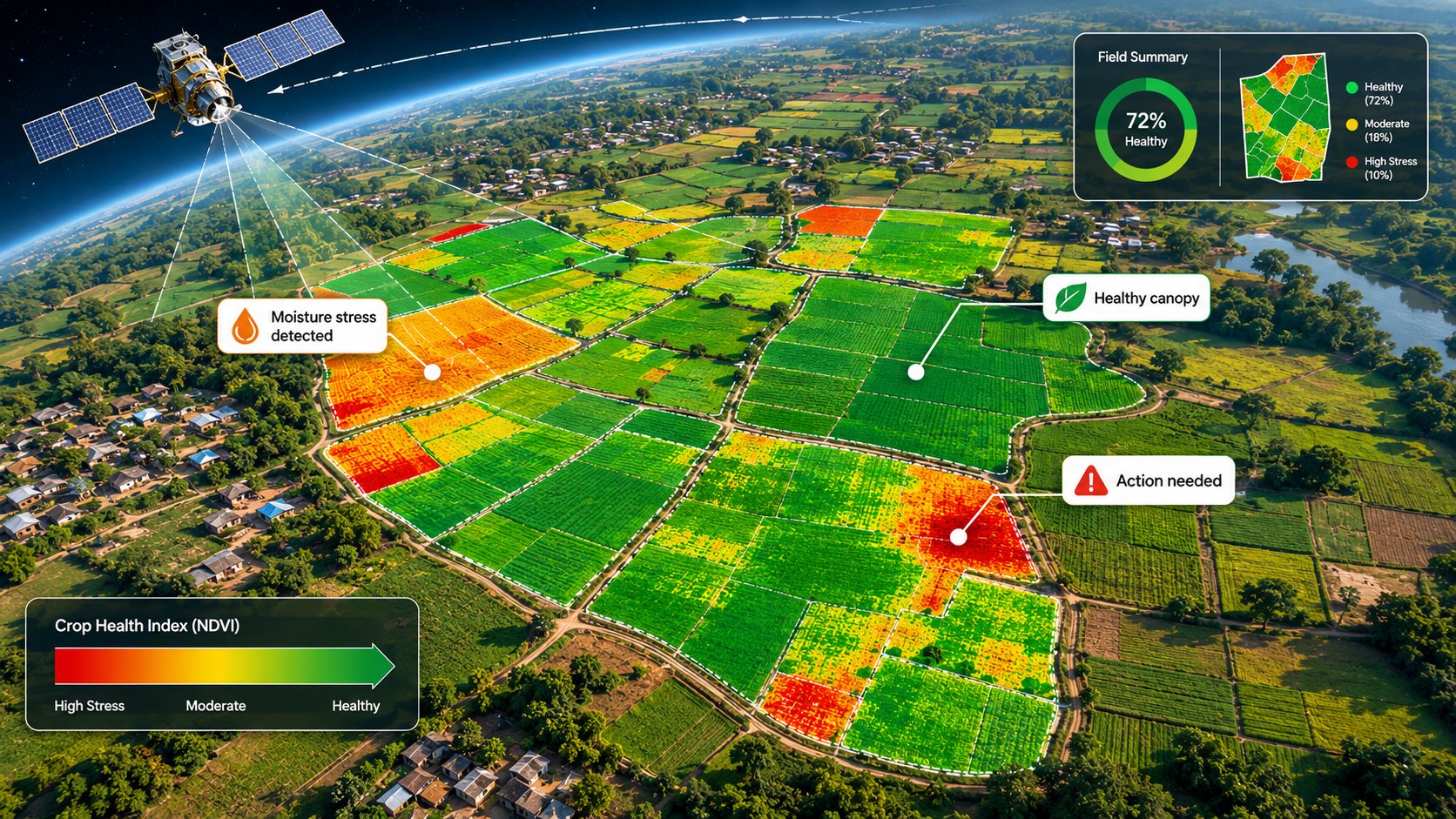
Satellite-derived crop health analysis showing NDVI heatmap
Many farmers describe the same frustration: "My crop looks green, but every year I'm harvesting less."
The causes are often invisible to the naked eye: micronutrient deficiency, early-stage pest or disease attack, soil moisture stress that hasn't surfaced as wilting yet, and gradual soil health decline. By the time symptoms are visible, the yield loss has already been locked in.
How satellite monitoring helps
Satellite-derived indices like NDVI (vegetation health), NDMI (moisture), MCARI (chlorophyll), and spectral stress analysis can reveal these problems across every part of a field — not just the patch the farmer happens to walk past.
FarmHawk turns this data into crop-specific, actionable recommendations delivered in the farmer's language:
Which zones need immediate irrigation
Where nutrient imbalances exist
Early indicators of biotic stress (pests, disease)
What to apply, how much, and when
Catching a moisture deficit or nutrient lockout two weeks early can mean the difference between a moderate harvest and a failed one.
3. Lack of Market Leverage: The Information Gap
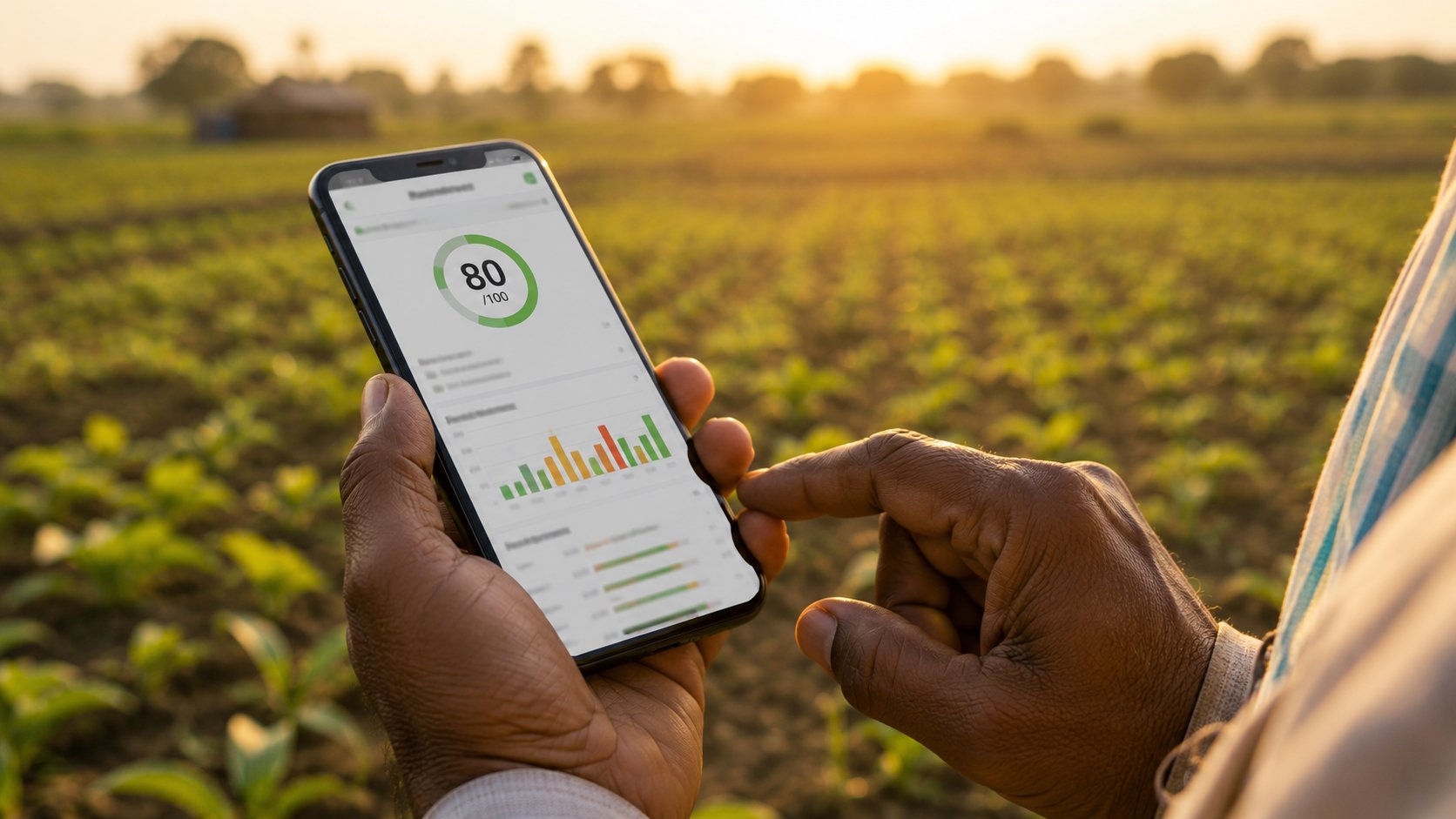
Farmer using FarmHawk to view farm health score
You grow the crop. You protect it through the season. You harvest it with your own hands. Then a buyer arrives, glances at it, and names a price that barely covers your input costs.
The root cause isn't exploitation alone — it's information asymmetry. The farmer has no verifiable record of crop quality. No proof that the field was healthy all season. No data to support a higher price.
How data changes the negotiation
Every FarmHawk analysis generates a detailed farm health report — 23 pages of satellite-verified data including vegetation indices, moisture analysis, pest risk assessment, nutrient status, and yield estimates.
This creates a verifiable digital record of the farm's condition throughout the season. Farmers can share this with buyers, cooperatives, lenders, and insurers.
This isn't a silver bullet for market pricing. But it shifts the conversation from "trust me, the crop is good" to "here's the satellite data showing exactly what condition this field has been in all season."
For the first time, smallholder farmers have data-backed leverage in market conversations.
Built for Farmers Who Need It Most
FarmHawk was designed specifically for smallholder farmers in India, Nigeria, and Kenya — with plans to expand.
No drones, no soil sensors, no hardware to buy or maintain
Advisory delivered in 14 languages including Telugu, Hindi, Hausa, Yoruba, and Swahili
Just a phone number, a 4-digit PIN, and a farm boundary
The platform analyses your farm using the latest available Sentinel-2 satellite pass and delivers a comprehensive report — vegetation health, moisture stress, pest risk, nutrient status, yield forecast, and a prioritised 7-day action plan.
Visit farmhawk.ai to get started — your first analysis is free.